Your Simple Guide to Starting Needle-Felting
Starting something new gives me such a rush.
Anticipation. Possibility. Excitement…
But as a classic overthinker, all that energy quickly turns into a bit of overwhelm:
“Do I get the best supplies or just start cheap?”
“What brand is actually worth it?”
“Am I doing this wrong already?”
If that sounds familiar, you’re not alone. Sometimes, decision paralysis keeps you from starting something you were so excited to try.
But here’s the thing: needle-felting is an accessible craft, great for beginners. You don’t need a ton of fancy tools or years of experience to get started. All you need are a few essentials, and I’ve got you covered.
The Must-Haves
Every needle-felting project uses these three basics:
Felting mat
Felting needles
Wool
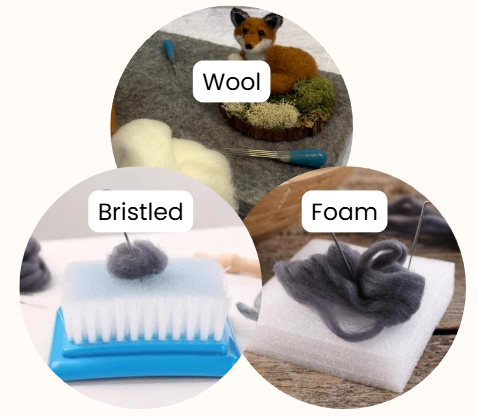
Felting mat: Think of this as your project’s soft landing pad. It protects your needles, your fingers, and your wool. Mats come in various materials, like wool, foam, or bristled-style mats.
I love natural-felted wool mats. Why? The wool you’re felting won’t stick, and you get nice firm support under your project.
Felting needles: These aren’t ordinary needles—they’re barbed, so as they go in and out of wool, they catch and tangle the fibers, allowing you to shape your project.
Beginners can get almost anything done with these three sizes:
36-gauge: for firm bases and deep lines/holes
38-gauge: for general compaction and shaping
40-gauge: for finishing details and smoothing
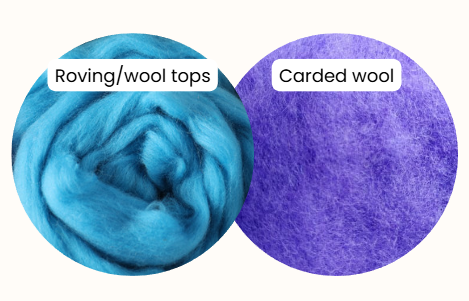
Wool: You’ll see roving (wool tops) and carded wool.
Roving (wool tops): Long, parallel fibers. Great for realistic hair, fur, or spinning into yarn. Slower to felt.
Carded: Fibers brushed in different directions for wool that felts quickly and leaves a soft finish—perfect for 3D projects.
Pro tip: For base/core shapes, use less expensive wool since you’ll be covering it with your colored wool and details anyway.
Once you have these essentials, you’re ready to start felting!
Nice-to-Haves
(Optional but Helpful)
Silicone finger shields: Because ouch—those needles are sharp!
Needle holder: Reduces hand fatigue and can help with control. Some hold multiple needles for faster work.
Scissors & a small brush (like an eyelash brush): Trim stray fibers and smooth your finished piece.
Small glass eyes: They add a realistic touch, making your project pop.
Where to Buy
For wool, check if you have any local suppliers. Supporting small businesses often means higher-quality, ethically sourced wool.
For the other essentials, a beginner-friendly starter kit can be a convenient option, like this one, which includes needles, a needle holder, and a mat.
Ready to start your first project?
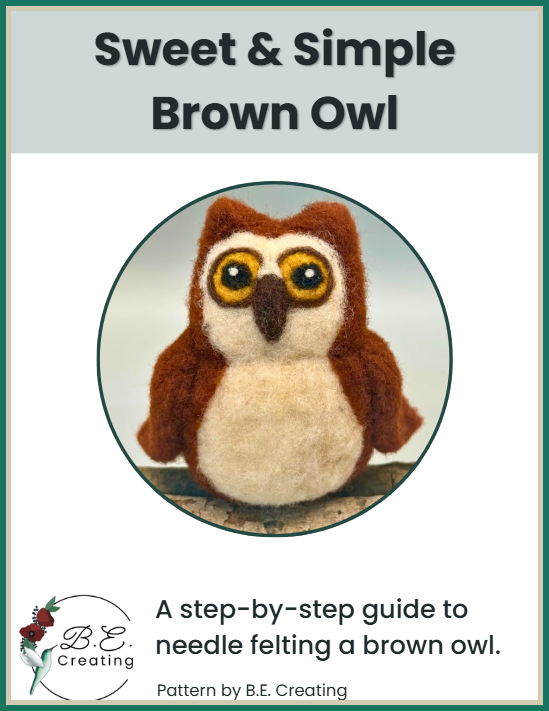
If you want a simple, beginner-friendly pattern, sign up for my newsletter. You’ll receive a free PDF to make an adorable brown owl. Perfect for practicing your new skills.
Happy felting!
Thank you for subscribing!
Have a great day!
